Speakers during sessions of the conference
Doha: The Social Responsibility Committee of Dar Al Sharq yesterday announced the winners of the Social Responsibility Awards 2021.
The winners included several sectors including health, security, commercial, education, banking and humanitarian among others who had played an important role in addressing the coronavirus pandemic. The 8th Social Responsibility Conference and Awards highlighted the role of companies and institutions in facing the coronavirus pandemic. Three sessions also discussed the same issue.
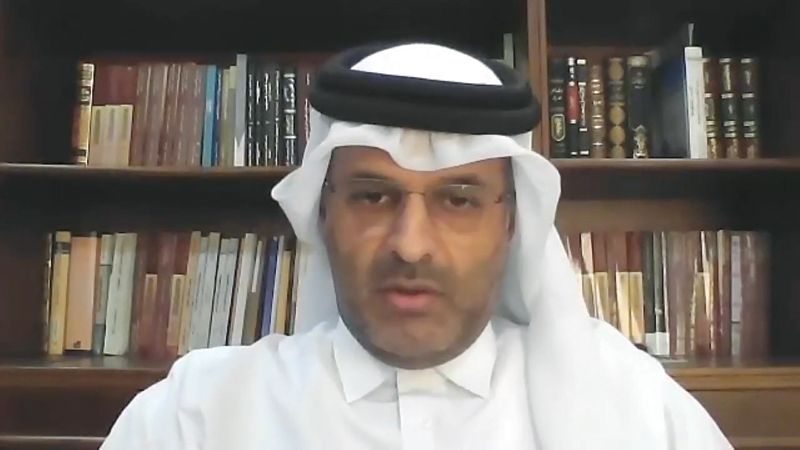
Sheikh Dr Thani bin Ali Al Thani, Chairman of Social Responsibility Committee of Dar Al Sharq
Speaking at the virtual conference, Sheikh Thani bin Ali Al Thani, Chairman of Social Responsibility Committee, said: “The coronavirus pandemic for the second year in a row pushed us to hold this conference virtually and the pandemic also required us to visit the winners of Social Responsibility Awards for honoring them in their places.”
“I am pleased to extend, on behalf of the Social Responsibility Committee of Dar Al Sharq, my thanks, congratulations and wishes to H E the Prime Minister and Minister of Interior, Chairman of the Supreme Committee for Crisis Management,” he added.
“Thank you for making all this wonderful and coordinated effort to fight coronavirus and congratulations for the success of the state agencies in providing the necessary protection for society from this pandemic, and we wish for continued success in confronting this pandemic,” the Chairman noted.
Chairman of Social Responsibility Committee announced the Award winners. For the health sector, the award went to the Ministry of Public Health; security sector to Ministry of the Interior; educational sector to Ministry of Education and Higher Education and Qatar Foundation; labor and workers sector to Ministry of Administrative Development, Labour and Social Affair; media sector to Qatar Media Corporation; commercial sector to Ministry of Commerce and Industry; business and retail sector to Lulu Hypermarket; aviation sector to Qatar Airways; sports sector to Supreme Committee for Delivery & Legacy; digital transformation sector to Ooredoo; banking sector to Qatar Development Bank; logistical sector to Qatar Rail; business organization sector to Qatar Chamber; energy sector to Kahramaa, and humanitarian work sector to Qatar Charity and Qatar Red Crescent.
He also emphasised that the repercussions left by this pandemic in societies are not easy or simple, that can be addressed in a year or two. “It may take many years for the world to recover.”
He added: “Thanks to the sponsors of this conference, especially the Qatar Rail, Kahramaa, Lulu Hypermarket Group, Qatar National Tourism Council, Qatar Charity, Dar Al Sharq Group, and Sheikh Dr. Khalid bin Thani Al Thani who puts Dar Al Sharq’s capabilities at the service of social responsibility.” The conference also held three sessions on medical, legal and humanitarian implications of the pandemic, in addition to its effects on poor people, and also the roles played by companies or government institutions from the perspective of social responsibility. Speaking at the first session, Dr Yousef Al Maslamani, medical director of Hamad General Hospital, said that the existence of the strategic committee that includes all medical service providers (Ministry of Public Health, Primary Health Care Corporation and Hamad Medical Corporation) was very important to provide excellent medical services.
“Each of these institutions had a task to perform, while the Ministry of Public Health was the guide for providing medical services, whether in the community or in hospitals,” he said.
Al Maslamai also referred to another committee, the Community Committee, which has a relationship with the Primary Health Care Corporation and its mission is to deal with infected cases in the community, whether in homes, schools, or government institutions. He also highlighted another important point, which is the scientific assistance provided by universities such as Qatar University and Weill Cornell Medicine University in charting the probability of increasing numbers and how to monitor them. “This helped in providing hospital beds.” For his part, Director of Lulu Group International, Dr. Mohamed Althaf, said: “The coronavirus pandemic has created difficult events and times in various countries of the world. But in Qatar, the matter was different because of cooperation and solidarity, whether from the Qatari government or from the local community with all its institutions, which created many benefits for society.” He also pointed out the importance of charitable work and social solidarity in the context of social responsibility in general.
“Last year in Ramadan there was the same issue on how to deal with the pressure caused by the increase in consumption in the month of Ramadan during the pandemic. Lulu Hypermarket was keen to provide all the requirements without an increase in prices or any crisis in the goods and products offered,” he mentioned.
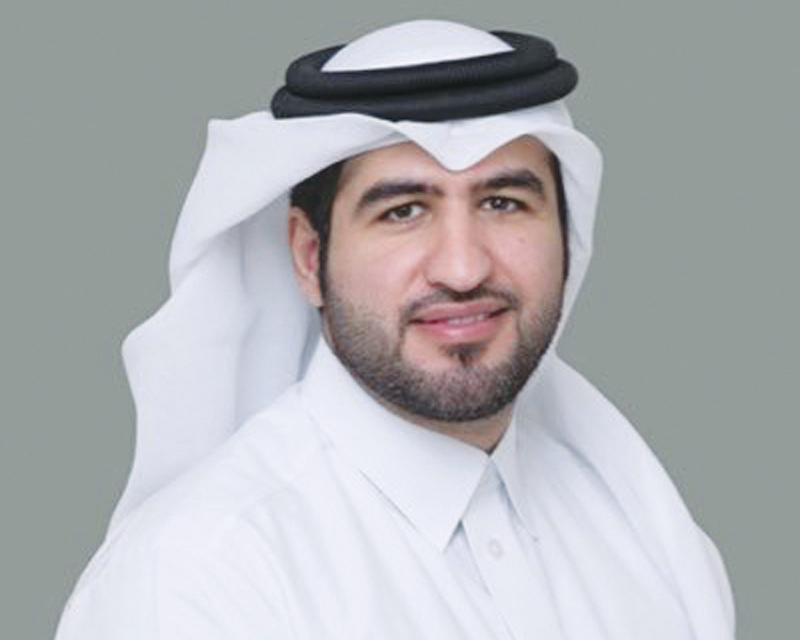
Abdulla Ali Al Mawlawi, Communication and Public Relations Director, Qatar Rail.
Abdulla Ali Al Mawlawi, Communication and Public Relations Director, Qatar Railways Company (Qatar Rail) said that the company has taken many precautionary measures and the aim is to protect passengers and protect society.
“At the beginning, we increased the workforce to sterilise and clean the trains by focusing on certain places. However, the metro was stopped from mid-March 2020 for a period of 6 months, but this period provided a valuable opportunity to add more services and equip other stations, so the trains were equipped with the wireless,” he added.
Al Mawlawi said: “The aim was and still is the continuation of services and the protection of passengers and society. Therefore, during the last period, we were able to implement the permanent plastic card system as an alternative to the paper ticket system.” Mohammed Ali Al Ghamdi, assistant to Qatar Charity’s CEO in the Governance and Institutional Development Sector, said that Qatar Charity was present during the coronavirus pandemic in about 60 countries around the world at a cost of about $27m, from which about a million people benefited in partnership with our international partners or United Nations organizations.
“This was the largest emergency plan to be implemented in decades in light of global changes, including that the world has changed its orientations from development to responding to emergencies and crisis management,” he said.