Deputy Prime Minister and Minister of Artificial Intelligence and Digital Development of the Republic of Kazakhstan H E Zhaslan Madiyev
Doha, Qatar: Qatar and Kazakhstan are strengthening their strategic partnership by combining investment, digital innovation and technological expertise to unlock new opportunities in AI and the digital economy.
Deputy Prime Minister and Minister of Artificial Intelligence and Digital Development of the Republic of Kazakhstan H E Zhaslan Madiyev in an interview with The Peninsula, on the sidelines of MWC26 Doha said, with Qatar’s investment capacity and Kazakhstan’s growing digital ecosystem, talent and potential to develop computing infrastructure, the two countries have significant opportunities to advance cooperation in the digital economy.
“Our countries have already agreed on a strategic partnership and continue to discuss joint projects in telecommunications and digital technologies. These areas were included in high-level talks in 2026.
“We also share an international platform for cooperation. Kazakhstan and Qatar are both part of Pax Silica, an initiative focused on trusted technology supply chains for the AI economy. Its areas of focus include AI, data centres, energy, critical minerals, research and talent development. This creates further opportunities for dialogue and joint projects,” Madiyev said.
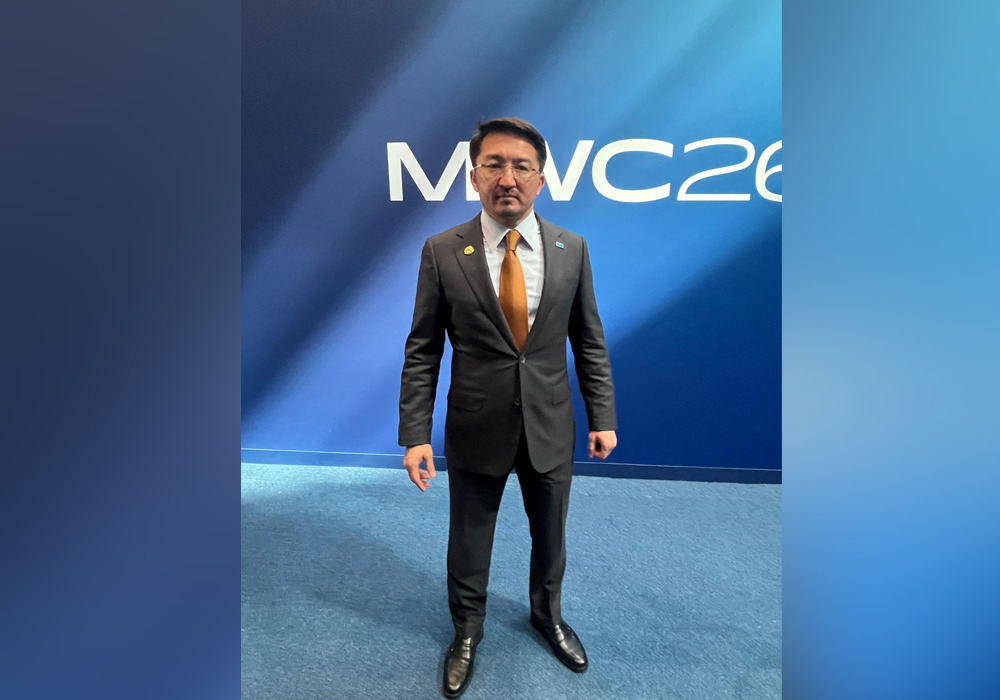
Deputy Prime Minister and Minister of Artificial Intelligence and Digital Development of the Republic of Kazakhstan H E Zhaslan Madiyev
Hosting MWC26 Doha strengthens Qatar’s role as an international meeting point for governments, regulators, telecommunications companies and technology businesses. This year, MWC26 is taking place alongside the ITU Plenipotentiary Conference, linking discussions on global digital policy with the practical application of technology.
For Kazakhstan, this is an opportunity to build on the dialogue already underway with Qatar. “Our ministries responsible for digital development have signed a cooperation memorandum, and subsequent meetings have addressed digital infrastructure, innovation and telecommunications. MWC26 Doha can help advance specific projects and strengthen ties between companies in our two countries,” he added.
Replying to a query regarding the opportunities for deeper technological cooperation between the two countries, Madiyev noted, Kazakhstan and Qatar already have a strong foundation for cooperation.
During the President of Kazakhstan’s state visit to Doha in February 2024, the two countries’ ministries responsible for digital development signed a memorandum of cooperation in communications and information technology. I also met with Qatar’s Minister of Communications and Information Technology, Mohammed bin Ali Al Mannai. We discussed opportunities to work together on digital infrastructure and innovation. The next step is to translate these agreements into practical cooperation. The most promising areas include AI, data centres, telecommunications, cybersecurity, digital public services and skills development. This could involve sharing expertise, joint investment and projects between companies in our two countries.
He added, “These priorities are closely aligned with Kazakhstan’s national agenda. In his State of the Nation Address, President Kassym-Jomart Tokayev identified digitalisation and AI as key drivers of future economic growth and competitiveness. He called for the accelerated implementation of the Digital Qazaqstan strategy and the development of digital infrastructure, including data centres. This creates a clear basis for expanding cooperation with Qatar in these areas.”
Deputy Prime Minister and Minister of Artificial Intelligence and Digital Development further noted, Kazakhstan already has a major Qatari investor in its digital and telecommunications sector.
“In January 2025, Power International Holding completed the acquisition of 100% of Mobile Telecom-Service, which operates under the Tele2 and Altel brands. The company is a leading provider of 5G connectivity in Kazakhstan. This investment is a strong example of the trust Qatari businesses have in our market and of the practical results our partnership can deliver.
“Building on this presence, we see further opportunities in data centres, cloud services, AI computing infrastructure and digital solutions for industry and public services. One of Kazakhstan’s major projects is Data Center Valley in Ekibastuz, planned to have a total energy capacity of up to 1 GW,” Madiyev said.
These opportunities are aligned with the priorities set out by President Tokayev - building an AI-powered digital economy, strengthening the country’s technological capabilities and applying advanced technologies across the economy. He added, “We are open to expanding cooperation with Qatari partners in these areas and connecting them with Kazakhstan’s technology ecosystem, including Astana Hub and the Astana International Financial Centre.”
Madiyev stated, Kazakhstan and Qatar can also continue their dialogue through international initiatives such as Pax Silica, where both countries are engaged in discussions on trusted technology supply chains and AI infrastructure.
AI can increase productivity in energy, industry, agriculture, logistics and healthcare, while also improving public services. Realising this potential requires computing capacity, skilled professionals and solutions tailored to each country’s needs. This is where cooperation between Qatar and Kazakhstan can make a tangible difference.
Regarding joint initiatives between the two countries in in AI and digital technology by 2030, Madiyev said, “By 2030, we could develop several areas of cooperation. Joint investment in data centres and cloud infrastructure; the exchange of digital government solutions; collaboration between universities and research centres; and support for startups operating in both markets.
These plans reflect the President’s vision of building a digital economy through practical results. The focus is on applying AI and other advanced technologies in the economy, developing the necessary infrastructure and turning innovation into solutions that improve productivity and support economic growth.
Deputy Prime Minister and Minister of Artificial Intelligence and Digital Development of the Republic of Kazakhstan noted, these initiatives would build on the work already begun with the signing of the memorandum on communications and IT and discussions between our ministries. Given that digital technologies and telecommunications are already on the bilateral agenda, a practical next step could be to identify pilot projects involving government, business and the research community.
“Partnerships in infrastructure, investment, research and innovation can accelerate the digital development of both countries. Our priority is to ensure they deliver practical results: new technologies, skilled professionals and solutions that can be scaled,” he added.