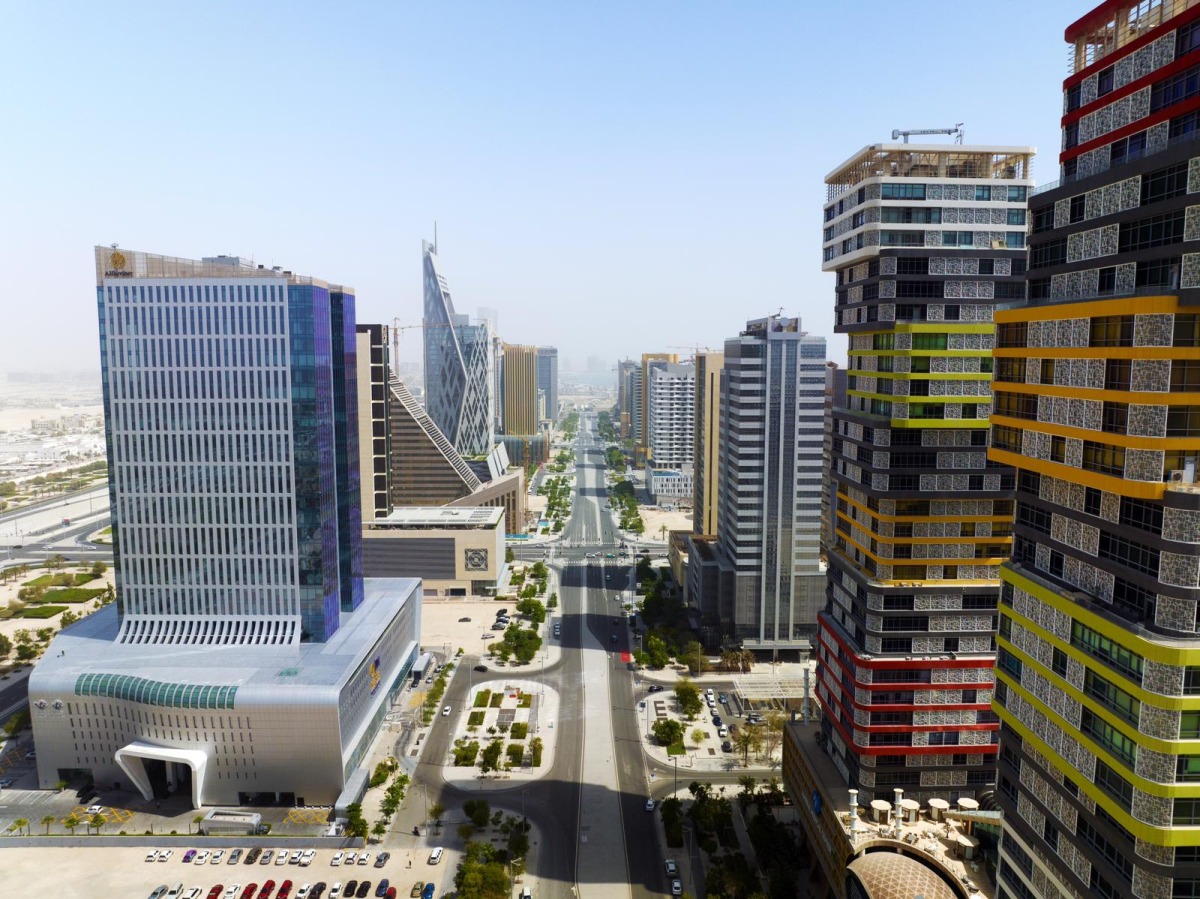
Doha, Qatar: Qatar’s commercial office sector demonstrated a growing divide between prime and secondary assets during the second quarter of 2026, noted ValuStrat in its latest real estate report.
While high-end developments in Lusail continued to record rent growth, secondary properties faced ongoing price reductions as corporate tenants prioritised space efficiency and cost control.
Lusail led overall growth with a 4.5 percent year-on-year gain, while established clusters like Al Sadd and Bin Mahmoud experienced a 1.7 percent annual drop.
The data highlighted that approximately 4,650 square metres of gross leasable area (GLA) was delivered during Q2 2026, bringing the country’s total office inventory to approximately 7.6 million square metres GLA.
New completions were strictly restricted to Grade B and C office units located within industrial complexes in Birkat Al Awamer. Grade A office supply remained entirely unchanged during the quarter, with Doha municipality representing 57.9% of prime stock and Lusail accounting for the remaining 42.1 percent.
The ValuStrat Office Rental Index slipped to 96.2 points in Q2 2026 (relative to its Q1 2024 baseline of 100), reflecting general softness in commercial leasing.
However, asset quality determined performance outcomes across submarkets as prime office properties recorded a 1.6 percent annual increase in rental rates.
Anum Hasan, Head of Research at ValuStrat Qatar, said, “Office rents remained broadly stable, with Grade A rates unchanged and Grade B rents declining by 2.1 percent QoQ.”
The report noted that the sharpest quarterly drops occurred in Al Sadd and Bin Mahmoud (-5.6 percent) and along C-Ring Road (-4.3 percent), while Salwa Road and Industrial Area Road clusters declined 4.6 percent annually.
With limited inbound corporate expansion, commercial lease absorption relied heavily on domestic companies and semi-government bodies upgrading their premises.
Notably, semi-government occupiers shifted away from legacy business districts into modern developments such as The Pearl Qatar, freeing up additional inventory in traditional hubs.
An estimated 80,628 square metres GLA is slated for delivery through the remainder of 2026. However, market analysts warn that shipping bottlenecks, rising project costs, and cautious leasing interest could delay completions or lead developers to reassess near-term capital deployment.
“Market participants reported that workforce reductions, delayed expansion plans, and workplace reviews had begun to affect occupancy, although the impact remained limited,” Hasan said.
She further added, “Demand continued to be supported by relocations to higher-quality offices by semi-government entities, although this largely represented existing occupiers upgrading rather than new demand.”