Geneva: The State of Qatar has called for stronger international cooperation, increased development financing and targeted technical support to help the world's least developed countries achieve sustainable economic growth and graduate from their current classification.
Speaking at a high-level dialogue in Geneva on Friday, Minister of State for International Cooperation HE Dr Maryam bint Ali Al Misnad said progress in helping the world's poorest countries move beyond least developed country (LDC) status remained slow.
The session took place as part of the World Trade Organization's 10th Global Review of Aid for Trade and examined the effectiveness of initiatives to deliver tangible trade impact for Least Developed Countries.
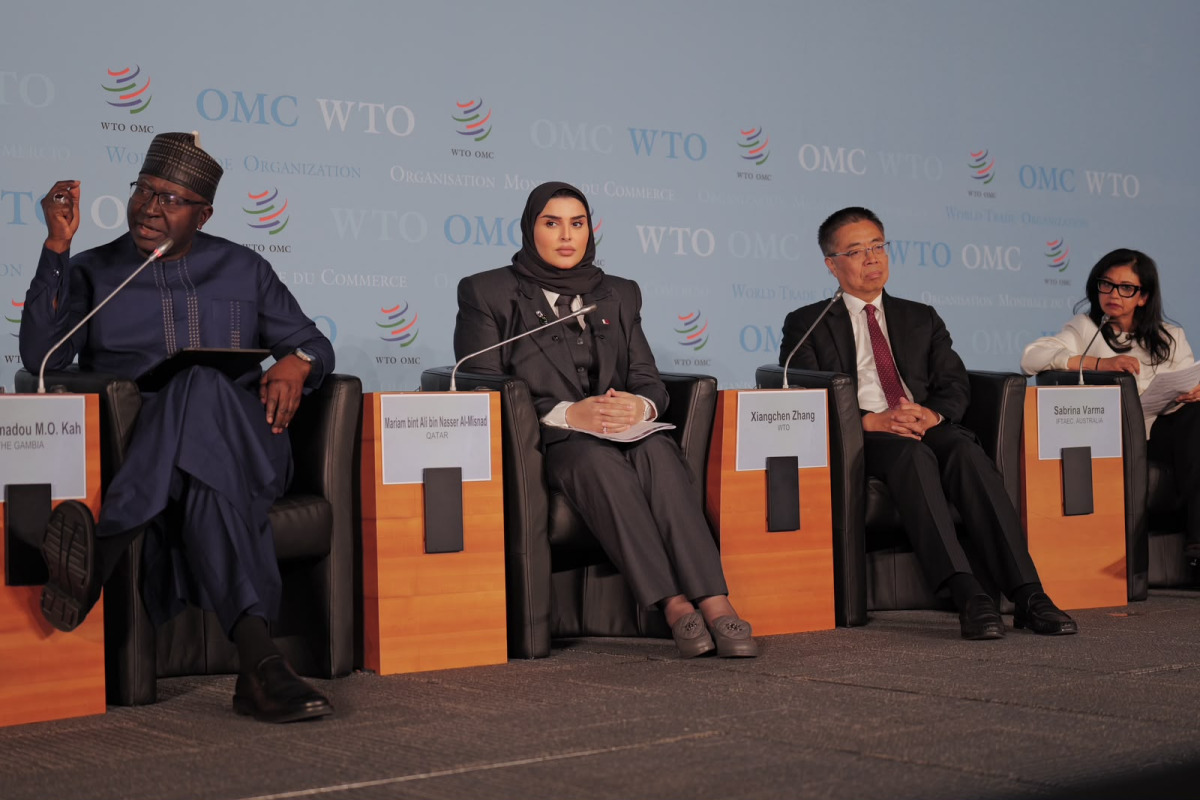
HE Al Misnad highlighted the scale of the challenge, noting that only eight countries had graduated from the LDC category since it was established in 1971, while 44 countries remained on the list, with several others at different stages of the graduation process.
The figures, she said, highlighted a significant gap between international ambitions and actual progress, underscoring the need for more effective action to address structural barriers to sustainable development.
HE Al Misnad said the Doha Programme of Action for the LDCs (2022–2031) provided an important international framework for accelerating progress and supporting countries in achieving the Sustainable Development Goals.
She also pointed to the midterm review of the program, scheduled to take place in Doha in March 2027, as a key opportunity to assess achievements, identify implementation gaps and move beyond political commitments towards tangible results.
The meeting should serve as a turning point in international efforts to accelerate graduation, she said, outlining three key priorities.
These include developing tailored national graduation plans, strengthening technical assistance and institutional capacity, and ensuring sustainable financial support both before and after countries graduate from LDC status.
She stressed that each country should have a national roadmap based on its specific needs and challenges, identifying necessary reforms, resources, timelines and measurable progress indicators.
Al Misnad also called for a distinction between countries close to meeting graduation criteria and those facing deeper structural challenges, arguing that international assistance should be better targeted to reflect their different circumstances.
On technical support, she said sustainable graduation depended on stronger institutions and productive capacity, improved education and healthcare, and greater access to technology and innovation.
Her Excellency urged the United Nations system, international institutions and development partners to provide direct technical assistance aligned with national priorities.
The minister emphasized that graduation must be supported by long-term and affordable development financing, alongside greater investment in productive sectors, infrastructure and human capital.
She called for increased development funding, expanded grants and concessional finance, and stronger cooperation with multilateral development banks and international financial institutions.
She also urged the international community to translate commitments made at the Fifth United Nations Conference on the LDCs into practical programs and projects, backed by clear implementation timelines, defined responsibilities and transparent monitoring of financial and technical commitments.
Al Misnad highlighted several initiatives under the Doha Programme of Action that require renewed attention, including sustainable investment support, improved food storage systems, stronger food security and the proposed establishment of a dedicated virtual university for least developed countries.
Other priorities include strengthening resilience and crisis management, as well as establishing international and regional centers to promote innovation and knowledge transfer.
She said these initiatives would require adequate funding, technical expertise and effective governance arrangements to ensure their long-term sustainability.
HE Al Misnad also highlighted the growing importance of technology and innovation as drivers of economic growth, calling for greater investment in digital infrastructure, internet connectivity, digital education and technological skills.
She stressed the need to improve access to modern technologies, including artificial intelligence applications suited to the development needs of least developed countries, while ensuring local capacity-building and data protection.
Al Misnad said the March 2027 meeting in Doha should provide an opportunity for the international community to agree on concrete measures based on national plans, targeted technical assistance and sustainable financing.
She added that progress should be assessed not simply by the number of countries graduating from LDC status, but also by their ability to sustain economic and social gains, withstand crises and achieve long-term sustainable development.
The Doha Programme of Action runs until 2031 and aims to address the structural challenges facing the world's least developed countries, accelerate implementation of the Sustainable Development Goals and enable more countries to achieve sustainable graduation.