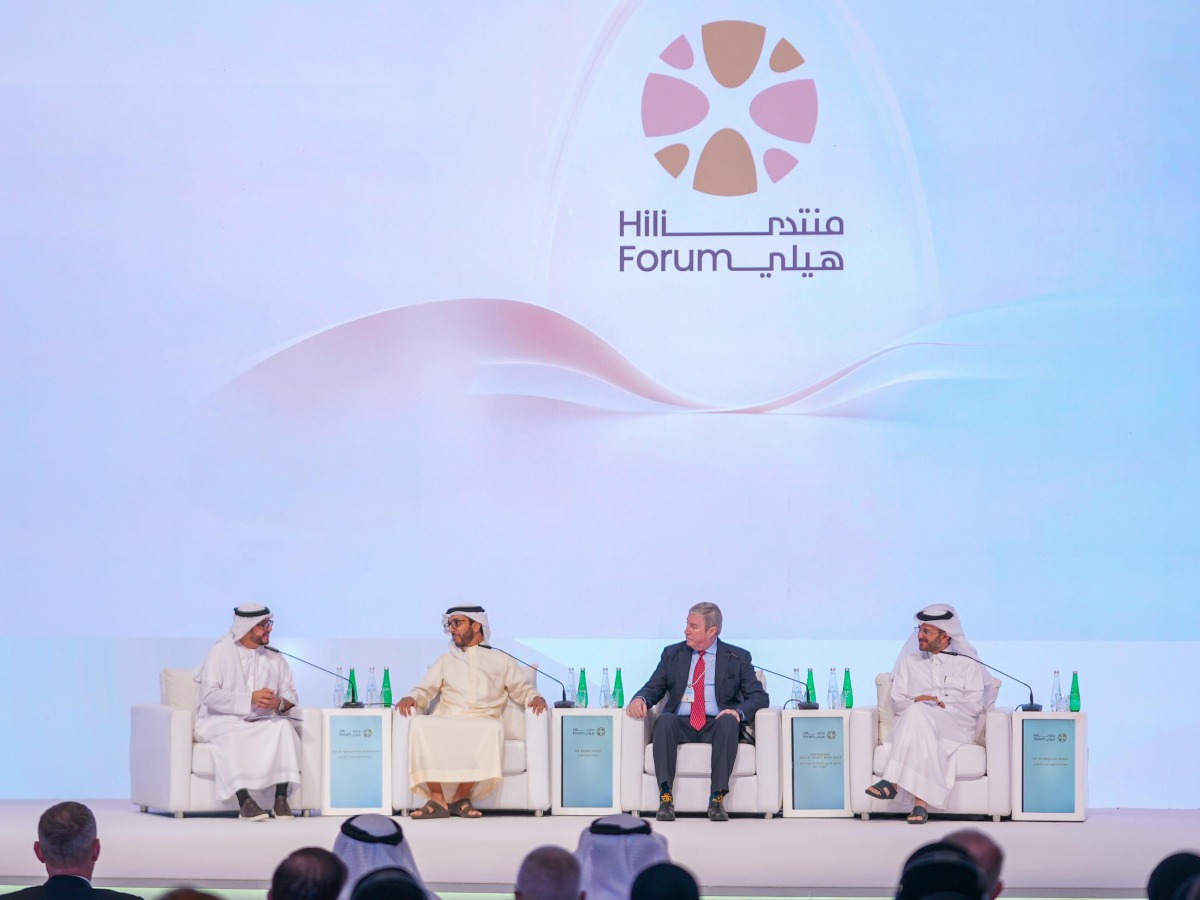
Abu Dhabi: Advisor to the Prime Minister and Official Spokesperson for the Ministry of Foreign Affairs Dr. Majed bin Mohammed Al Ansari engaged Monday in the plenary session at the third edition of the Hili Forum 2026, convened in Abu Dhabi under the theme "Gulf at Crossroads: Conflict, Consequences and Course Correction".
Having weighed in during a plenary panel on "Gulf Regional Security Complexes", Dr. Al Ansari tackled the evolving situation in the Gulf and its implications for global security and stability.
He pointed out that the fallout from the current crisis is not limited to the countries of the region, but that its impact spills over into energy, commerce, maritime navigation, and international supply chains.
The war has put the region's countries' alignment in assessing shared threats to a genuine test, Dr. Al Ansari underlined, stating that this war demonstrated the importance of turning this recognition into tight-knit collective action.
The advisor further remarked that Gulf security is a shared responsibility and those countries should remain fundamental partners in framing any arrangements pertaining to Gulf security and the future.
Closing the Strait of Hormuz and disrupting navigation doesn't merely pose an economic challenge but is an overall issue with broader implications for global security, Dr. Al Ansari suggested.
He warned of the perils of weaponizing critical waterways as tools of pressure and undermining effective deterrence amid the low cost of disruption to trade and maritime traffic.
The primary threat lies in normalizing what has transpired in the region over the past months and treating it as a new reality to be taken for granted, rather than as a temporary crisis, Dr. Al Ansari highlighted, stressing that the lack of international accountability for such violations encourages their recurrence and erodes the international system of security and stability.
Dr. Al Ansari recalled that the recent developments have revealed the fragility of the regional security structure that is fundamentally based on deterrence and defense, engendering the need for building a more resilient and enduring system.
This system, he suggested, should be based on collective security, operationalizing diplomacy, strengthening collaborative efforts among the Gulf nations, as well as cementing mutual economic interdependence and protecting critical supply chains.
In this regard, Dr. Al Ansari highlighted the State of Qatar's expertise in mediation and its efforts to advance dialogue and the peaceful resolution of conflicts, emphasizing that the success of any mediation hinges on the parties' political will, as well as their shared interest in reaching a resolution.
Dialogue doesn't mean aligning with any party, but rather a significant tool to prevent escalation, maintain communications, and reach sustainable solutions, Dr. Al Ansari said.
He added that engendering remediation for the current challenges requires shared regional and international responsibility, because what is happening in the Gulf spills over into the entire world.