The Palme d'Or trophy is photographed at Chopard's high-jewelry workshops, in Meyrin near Geneva, on April 21, 2026. Photo by Fabrice COFFRINI / AFP
Meyrin, Switzerland: The Palme d'Or, the top prize at the Cannes Film Festival, takes more than 70 hours of meticulous craftsmanship to produce at Swiss jeweller Chopard's workshops outside Geneva.
Since its creation in 1955, the Palme d'Or has constantly evolved. Its current form was conceived in 1998 by Caroline Scheufele, co-president of Chopard.
The luxury watchmaking and jewellery house makes all the trophies awarded by the jury during the world's most prestigious film festival, which takes over Cannes on the southwest French coast, this year from May 12 to 23.
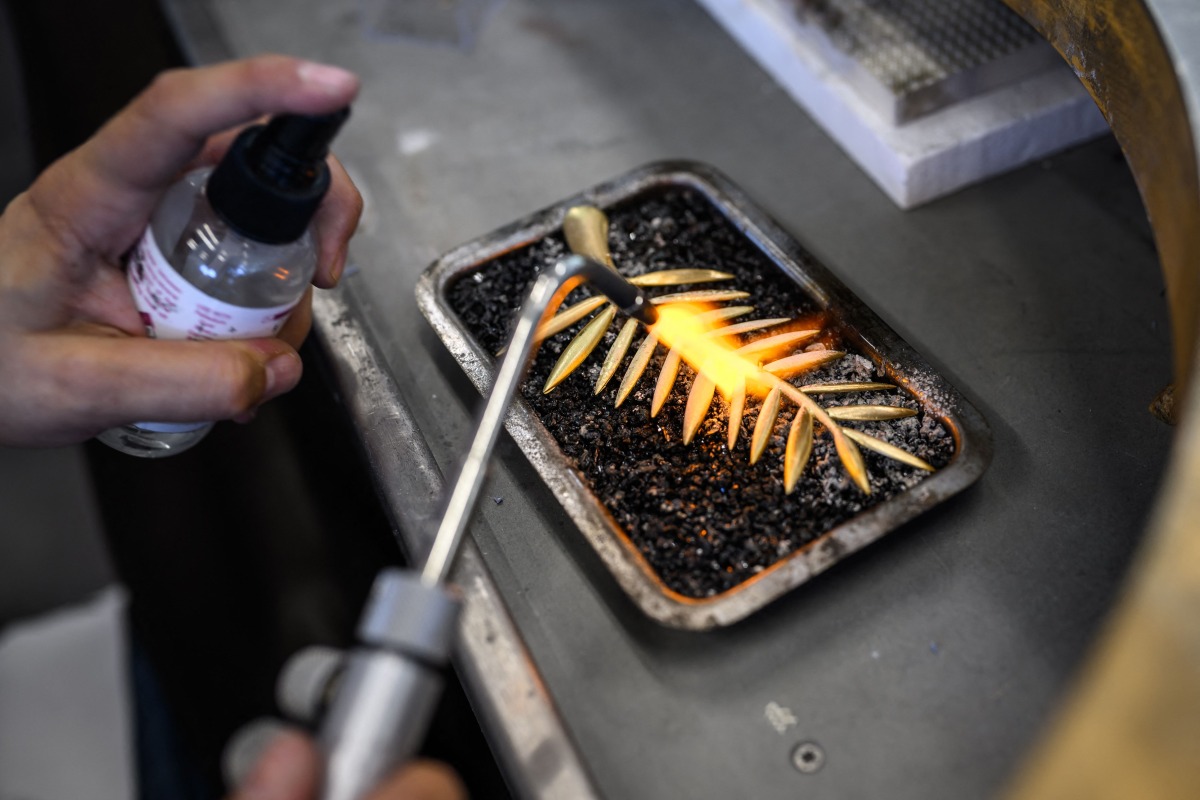
An artisan uses a blowtorch to heat a Palme d'Or during a reenactment of the creation of the Palme d'Or, at Chopard's high-jewelry workshops, in Meyrin near Geneva, on April 21, 2026. Photo by Fabrice COFFRINI / AFP
"What we brought to the table, which is very different from the original, is that the stem of the Palme d'Or ends in a small heart shape, which is a bit of a nod to cinema, the love for cinema," Scheufele told AFP, adding that she designs "a lot of jewellery with hearts".
At the workshop in Meyrin, a Geneva suburb on the French border, creating the Palme d'Or begins with the casting technique.
This involves creating a model of the stem with its leaves in wax within a rubber mold, which is then immersed in liquid plaster.
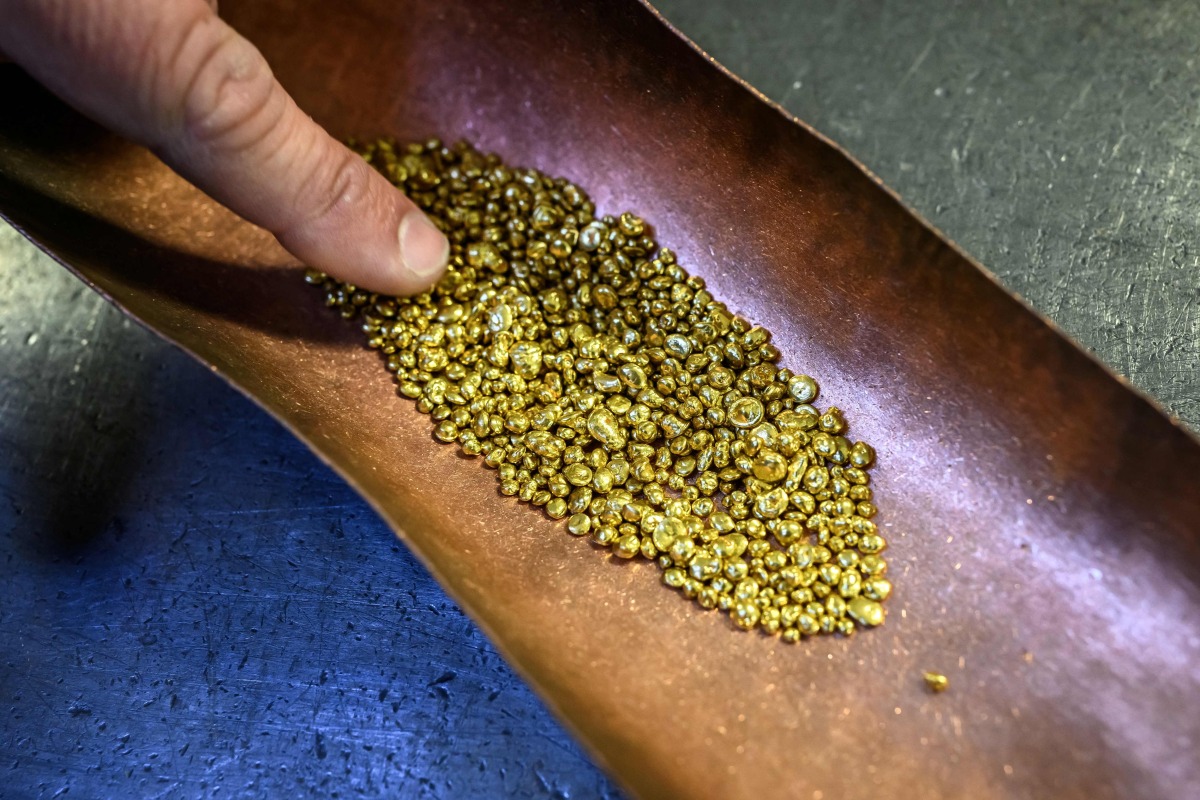
This photograph taken on April 21, 2026 shows Fairmined-certified gold granules destined to be melted down at Chopard's high-jewelry workshops in Meyrin, near Geneva. Photo by Fabrice COFFRINI / AFP
The plaster is heated to 760C, causing the wax to melt away, leaving an impression into which molten metal is injected.
Once solidified, the piece is extracted by dissolving the mold, then cleaned and treated to remove any impurities.
Next comes the assembly.
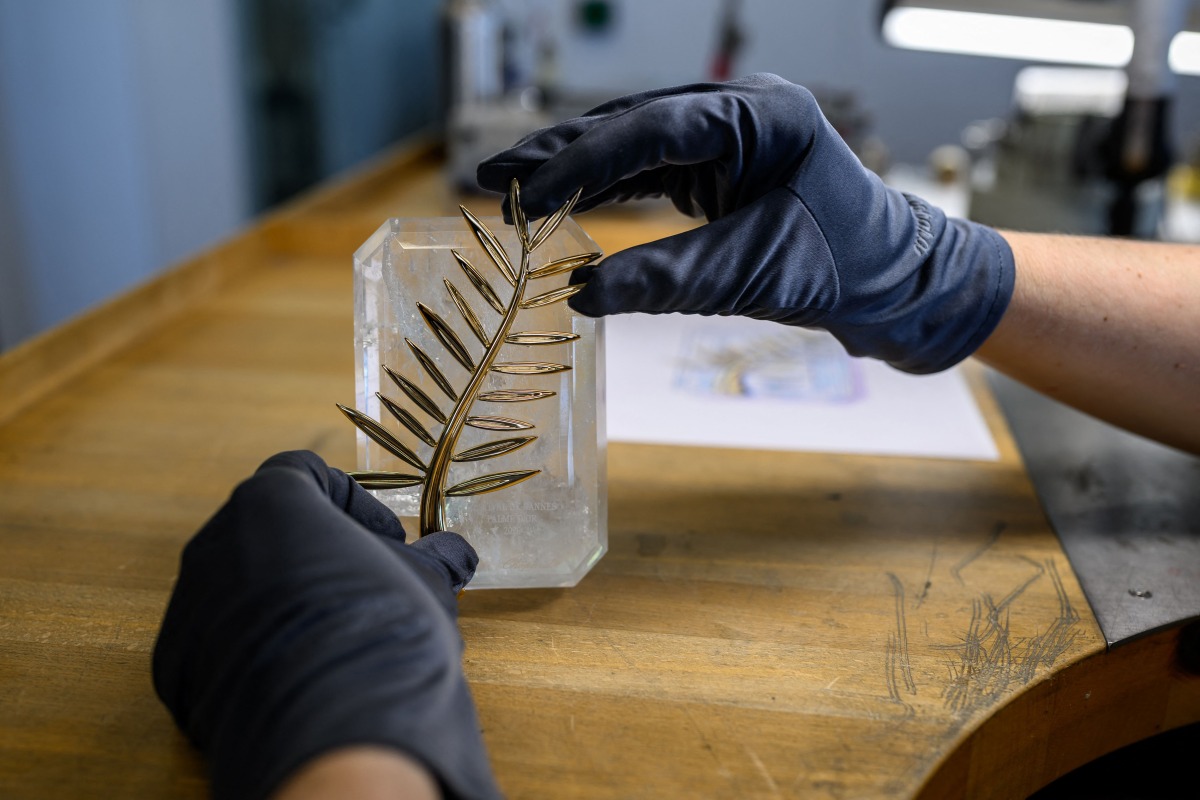
An artisan adjustes a Palme d'Or on a crystal cushion previously drilled with precision, during a reenactment of the creation of the Palme d'Or, at Chopard's high-jewelry workshops, in Meyrin near Geneva, on April 21, 2026. Photo by Fabrice COFFRINI / AFP
The various parts are reworked, hand-polished, and carefully attached: each gold leaf is fitted and soldered onto the stem.
After a final polish, the Palme d'Or is mounted on a precisely-drilled rock crystal cushion and then secured, creating a display-ready piece.
The Palme d'Or is made of 118 grammes of yellow gold which rests on the crystal cushion, shaped like an emerald-cut diamond.
"The appeal of rock crystal is that... the base is always slightly different, so each year the Palme d'Or has a slightly different look," said Scheufele.
Chopard makes two Palme d'Or awards for Cannes each year -- in case of a tie or unforeseen circumstances.
The prize goes to the director of the best feature film.
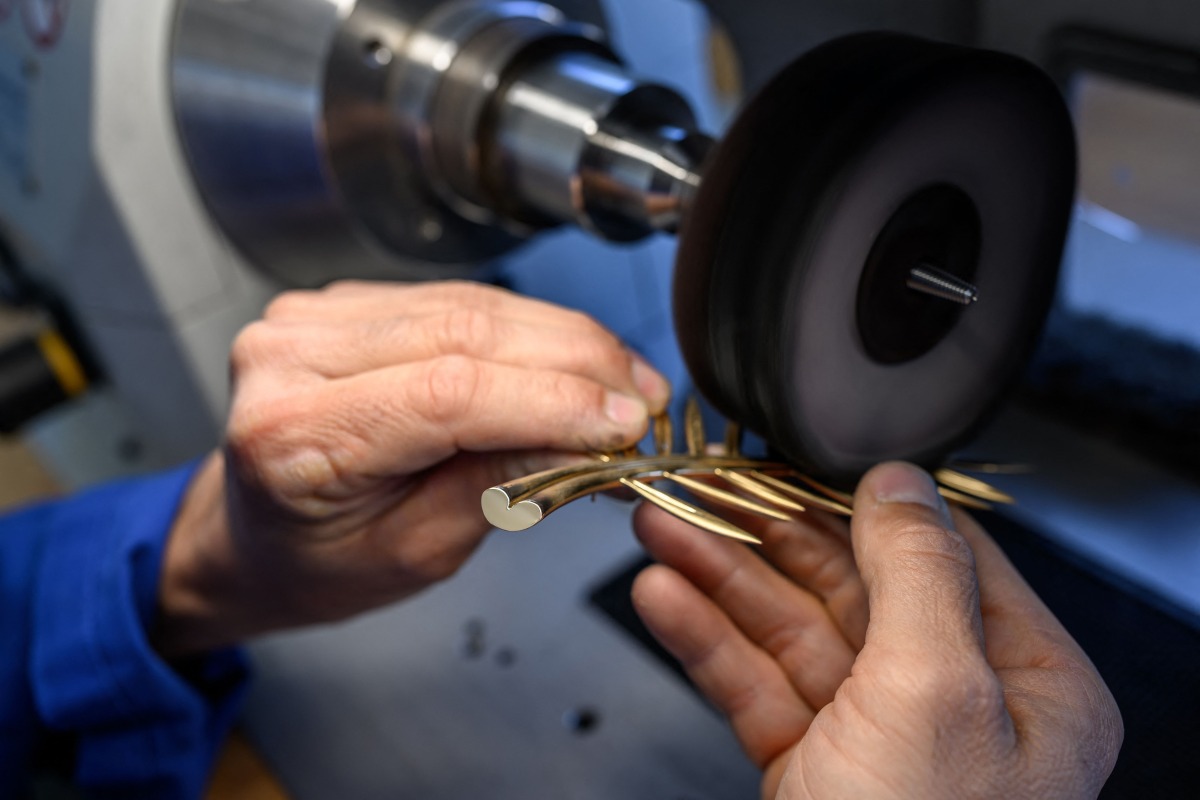
An artisan polishes a Palme d'Or during a reenactment of the creation of the Palme d'Or, at Chopard's high-jewelry workshops, in Meyrin near Geneva, on April 21, 2026. Photo by Fabrice COFFRINI / AFP
Chaired by South Korean director Park Chan-wook, the festival jury will award this Palme d'Or on May 23, at the end of the Cannes fortnight.
Last year, the award went to "It Was Just an Accident" by dissident Iranian filmmaker Jafar Panahi.
Previous winning filmmakers include Luis Bunuel, Jane Campion, Federico Fellini, Francis Ford Coppola, Akira Kurosawa, Emir Kusturica, David Lean, David Lynch, Lars von Trier, Quentin Tarantino, Martin Scorsese and Orson Welles.