Picture by Layla Abou Hamed
Doha, Qatar: The cats that arrive at Pawmise Rescue are often the ones no one else wants. Some have been hit by cars. Others are blind, paralyzed, abandoned, or born with conditions that make life on the streets impossible. Many arrive carrying physical scars. Some carry emotional ones.
A charismatic black-and-white cat with an affectionate personality, Nibbler, lives here with Cerebellar Hypoplasia, commonly known as "wobbly cat syndrome." The neurological condition affects balance and coordination because the cerebellum is underdeveloped at birth. Despite his unsteady movements, Nibbler remains playful, curious, and eager for affection.
What his condition affects most is not his quality of life, but his chances of being adopted.
Cases like Nibbler's often fall through the cracks. That is where Pawmise Rescue steps in.
 Nibbler, a black-and-white cat with an affectionate personality
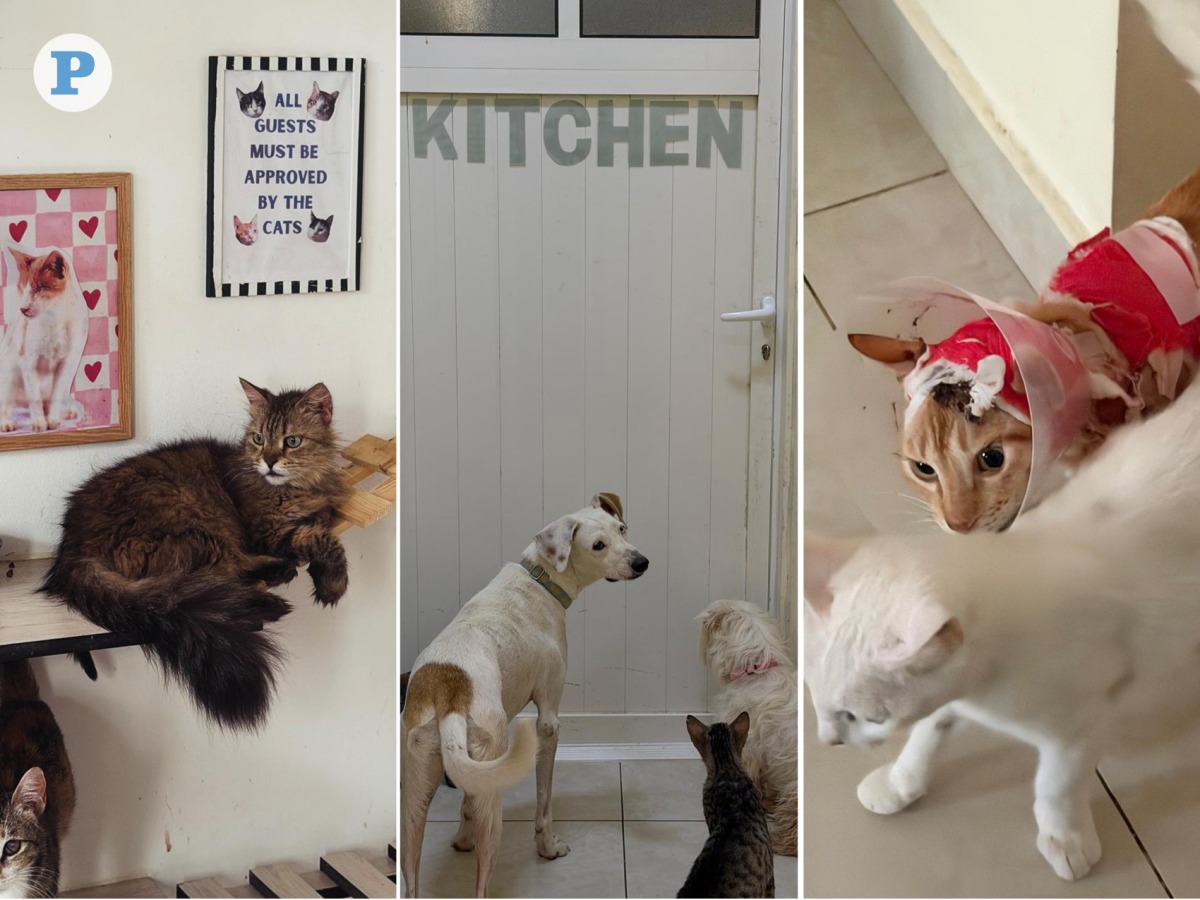
Operating since late 2018, the non-profit animal rescue organization is dedicated to caring for some of Qatar's most vulnerable animals. The rescue specializes in cats and dogs with special needs that often have nowhere else to go. Today, Pawmise cares for more than 350 cats and seven to eight dogs, many of whom are unable to depend on themselves in their natural habitat.
"We specialize in paralyzed cats," said Dana Al Ali, Head of Communications and Adoption Coordinator at Pawmise Rescue. "Any cats hit by cars, incontinent cats, blind cats, or cats with severe injuries that cannot be released back into a Trap, Neuter and Return (TNR) program. Those are the ones we focus on the most."
TNR, or Trap, Neuter and Return, involves humanely trapping stray cats, sterilizing them at a veterinary clinic, and returning them to their original territory. The approach helps control the stray population while allowing healthy community cats to continue living safely outdoors.
While many stray cats can thrive after undergoing TNR, Al Ali explains that rescues like Pawmise exist for animals that have little chance of surviving independently.
For Pawmise, the mission begins with the cats "that simply no one else wants."
The rescue takes in animals that have been abandoned, offering a commitment to them and providing a real possibility of a permanent home.
"We are proud of every single cat that we've ever rescued," Al Ali said. "As corny as that sounds, to see the way they blossom and what they blossom into is amazing."
Among those success stories, few embody the organization's mission quite like Nibbler. Despite his disability, Al Ali describes him as "such a big love bug."
"His disability doesn't stop him whatsoever," she said.
Other cats leave a different kind of impression.
 Rain - the Scottish Fold - before and after being rescued. Pictures provided
Rain, an elderly Scottish Fold, was discovered abandoned during one of Qatar's rainstorms. Al Ali recalled that when he was found, he was simply standing in the rain instead of seeking shelter like other cats.
"When he was found, he just stood there in the rain," she said.
The unusual behavior suggested something was wrong. Rescuers soon discovered that Rain had significant injuries and had likely once been a domesticated pet before being abandoned. A volunteer rescuer named Rija brought him to Pawmise, where he could receive the care he needed.
His story continues to touch the hearts of those at Pawmise and Al Ali. "Every time it rains now, all I think about is him," she said.
For abandoned pets, the emotional consequences can be devastating.
"You took this animal from its environment," Al Ali explained. "It got used to your routine, your scents, your home."
She recalled one cat that became so depressed after being abandoned by its family that it required a feeding tube for three months.
"Your cat actually depends on you," she said. "There's a commitment and responsibility for the rest of their life."
After nearly eight years of rescue work, Al Ali believes public attitudes toward animal welfare have improved. More people are choosing to adopt responsibly and are becoming more aware of the long-term commitment that comes with pet ownership.
"There has definitely been a bigger awareness," she said. "But there is still a lot of work to do."
One of the biggest misconceptions, she added, is that every stray animal needs to be rescued immediately.
"Not all animals need rescuing," Al Ali said. "Not every cat or dog you come across needs to be picked up unless they're severely injured. The alternative option is to perform TNR."
Instead, she encourages people to learn more about animal behavior and recognize that many healthy community cats can safely live outdoors. Rescue resources, she says, should be focused on animals that genuinely cannot survive on their own.
Beyond rescue efforts, Al Ali pointed to initiatives such as organized feeding stations and wider public awareness campaigns as practical steps that could strengthen local animal welfare efforts.
She also shared a message she hopes more people will remember, especially during periods of extreme weather.
"Just as you feel hot, scared, and frustrated sometimes, animals feel that as well," she said. "The best thing to do is treat them with kindness. If you have leftovers, put them outside. If you see a cat outside, just know they're not dirty and they're not scary, it's okay to pet them. And if you don't want to, that's fine too. Just stay away, but please don't hurt them."
Organizations like Pawmise continue helping ensure the wellbeing of animals one rescue at a time.
And for cats like Nibbler, being a little different has never made them any less deserving of love, care, and the chance to finally find a home.